 Loading... Please wait...


Classes, News & Reviews

Posted on 1st Jul 2026
Farmington River Report: July 1, 2026: Hot Weather, Cold Water
Store Hours: 8am-6pm Monday, Tuesday, Thursday, Friday. Wednesday 10am-3pm, Saturday & Sunday 8am-5pm
We are still looking for one more part-time employee, someone who knows the river well, is experienced and knowledgeable about flyfishing, and has a flexible schedule.
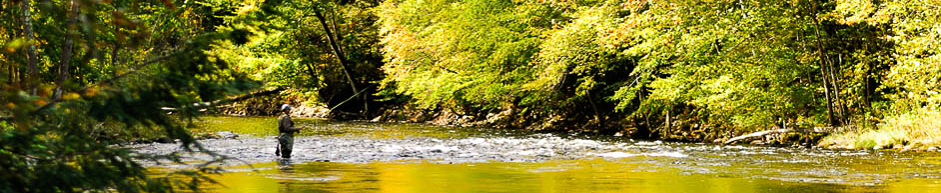
Pictured is Steve Hogan’s client Kathie with her first trout on a fly rod, what a great start!
Current Sale Items:
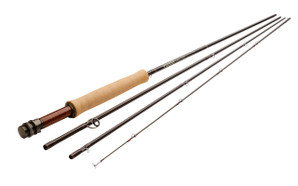
-Sage Sonic fly rods 25% off
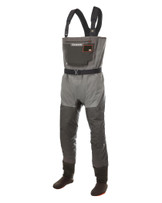
-Simms G3 Waders 20% off
Sales apply only to in-stock merchandise and can be bought in-store, or on the website & shipped to your door - call with any questions

Gift Certificates are available and can be sent by mail or bought on ourwebsite.
We will match most advertised deals and sales from other stores local or on the internet. We want your business, and as your friends and local fly shop please come to us first if we can help. Our business only survives because of your support.
The new 2026 Thomas & Thomas Contact III+ Euro rods are now available. We are happy to accept various trade ins toward the III+ to make them more affordable, and you can also trade in your Contact II. They have two different tips, including a solid one that enables you to more easily cast lighter flies, cushion lighter tippet, fish thin Micro Leaders, and it also makes it harder for smaller fish to throw the hook. The Contact III+ is made of a new material that’s twice as strong and recovers noticeably faster/crisper. This will translate into greater accuracy. With the included second tip, it's like getting two rods in one. Lengths remain the same at 10' & 10'9" with the exception of the new 11’ 5“ 3wt (3" longer). If you break a rod tip on these, T&T has an expedited repair program for the Contact III+ series that should have you back on the water with a new tip in a week, instead of the usual 6-8 weeks. Between the improved damping/recovery, new low profile single foot guides, and the added snake guide below the tip-top, you also get dramatically less tip wrapping with micro leaders.
We are now a Guideline dealer, They are a Scandanavian company that makes some great rods & reels and more. Zach & Derrrick are both BIG fans of their products. We have Euro, dry fly, and streamers rods from them. We also have Guideline Euro leader butt material in 3x to 5x for making micro leaders, plus a cool mini chest pack that you can attach 5 different ways.
Hours: Wednesday 10am-3pm. Monday, Tuesday, Thursday & Friday 8am-6pm. Weekends remain at 8am-5pm. We will stay on this schedule through the end of the summer.
Despite lower flows, the water coming out of the dam is icy cold and in the mid 40’s, and then gradually warms as it progresses downstream. You do need to be aware of water temps in the summer, especially during heatwaves like we have coming. Carry a thermometer and use it regularly so you can stay in cold water. Look for water temps 68 degrees or less, to avoid hurting trout. Ideally try to find water that is in the 50’s up to about 65 degrees, that is the optimal range. You can start somewhat downriver in the morning, but by late morning you need to start working upstream so you can stay in cool water all day long. I’d avoid the lower river (Collinsville, Unionville) in the summer, afternoon temps there can exceed 70 degrees. Usually morning in New Hartford and maybe even Canton are fine, but take water temps and move upstream as necessary.
A word about taking water temps. I see people doing it wrong all the time, and this can give you an artificially high reading. You need to do two things: 1) take the temperature in moving water, and 2) make sure your thermometer is in the shade when you take a reading. If you don’t do this and you take the temp in the slack water along the shoreline that is exposed to the sun all day, you can easily get a reading 5+ degrees above what the water temp is in the current. Some people will tell you taking the surface temp of the water in the river is no good, but that is not true. The max difference you may see in the slowest, deepest pools is maybe 1 degree between the surface and the bottom. And to the folks who dispute this and say the bottom layer of pool water is significantly cooler than the surface, I would point out that even if this was true, you still have to play your fish in the middle and upper layers of the water column.
Now that I’ve scared everybody about water temps, I need to point out that there are still miles of cold water below the dam on the Farmington River. It’s coming out of the dam at an ice cold 45 degrees, and then slowly gets warmer as you progress downstream. It’s coolest in the mornings, and warmest in the late afternoon. The further downstream you go, the warmer the water can get on hot, sunny afternoons. You should be fine just about anywhere in the upper 10 miles or so, which takes you down to just about where we are in New Hartford. Carry a thermometer and take water temps if you are in New Hartford or below. If exceeds 68 degrees, move upstream until you find water 65 degrees or less. Please don’t fish down in Collinsville, Unionville and below for trout, it’s too damn hot down there and can reach 70+ degrees. There are some sections that may be fine from first light to about 10am, and then you may need to move upstream to cooler water.
There are miles of trout-filled water outside of the Permanent TMA/C&R, so as long as water temps are doable, don’t limit yourself to only that 6 mile section. During hotter weather, it tends to push the better fishing closer to early/mid mornings & mid/late evenings. And as you get upriver and closer to the dam the water gets colder, and you are more apt to see “evening hatches” in the afternoons. Look for shady areas, trout will often move to the shady side of the river. The west side of the river goes into the shade the earliest, and sections with high ridges on the west side get shade the earliest of all- examples would be Mathie’s Grove, Campground, most of Riverton starting about ¼ mild above the Rt 20 bridge. Also, if you can stay in the shadows, it’s harder for the trout to see you as compared to if you are standing in the bright sun. Wear drab clothing colors too.
Main bugs are still Sulfurs & assorted Caddis, but Isonychia are a legit hatch that’s working it’s way upriver, at least as far up as Mathie’s Grove & the Campground, and likely above that by now. July is the peak month for Isonichia hatches. Don’t forget about Terrestrials, especially Ants & Beetles, they are very active now, and will be even more active during the heat wave. If they are not rising (often the case), go subsurface with nymph & wet flies/soft hackles, blind fish an Attractor dry fly, or do a Dry/Dropper rig with a nymph 18-24” under a buoyant/visible dry. Don’t go too heavy while nymphing the current low water conditions, or you will hang bottom constantly and not catch fish. Plus you don’t need to dredge bottom this time of year. Streamers are at their best during first and last light, and at their worst in the middle of a bright, sunny day. Mousing at night is a good option for big brown trout, keep your leader very short and heavy.
Hatches remain similar to what they were, but remember they work their way upstream, with any particular hatch happening last in Riverton due to the icy cold water coming out of the dam (mid 40’s). Sulfurs are a mix of #16 Invaria and #18 Dorothea- make sure you have BOTH sizes, trout can be picky on that. More of an evening hatch, but the further upriver you are the more the chances you may see an early to mid afternoon hatch of them. Assorted Caddis going from #16-24 (tan, olive/green, black, gray) are major players. Typically most hatching occurs from about mid morning to early afternoon, and then the adult Caddis come out in the evening to egg-lay in riffly water. Isonychia are picking up steam, with some good reports in New Hartford, and working their way upriver at least as far as Church Pool and likely above that. Iso’s are a big #8-12 fast water bug that typically emerge between late afternoon and dark. You can even blind fish them over likely looking fast water. July is the big month for this bug, one of my absolute favorite hatches. Iso’s will continue to hatch right into the mid fall time period, but they get smaller as the season progresses. #10 is about average for them currently, but some are bigger, some are smaller. Other bugs in the mix include #14 Light Cahills in the evenings, and #20-22 and smaller Blue Winged Olives (evenings, cloudy afternoons). #12-14 Vitreus are probably almost done, but there should still be a few up in Riverton near the dam.
Dry/Dropper with a Caddis dry and a trailing weighted pupa 1-2’ below can be an effective combo during a Caddis emergence- they usually take the pupa, and the dry acts as a suspender/indicator, but sometimes they eat the dry. Frequently the better dry fly action for Caddis is when they come back later in the day to egg-lay, usually in the low light of evenings. And sometimes swinging wet flies/soft hackles is the way to go when Caddis are hatching and/or egg-laying. On average, they are much better/faster swimmers than Mayflies, which is why the takes to them are often violent and trout will sometimes jump out of the water. They also tend to be most active in faster, broken water like riffles, pool heads, pocket water, etc. When fishing Caddis dries, sometimes the fish want them dead-drift, but frequently they won’t eat it unless you twitch/move it, the naturals are very active, not passive like a Mayflies.
****************************************************************************
Dries:
-Sulfur #16 (Invaria) and #18 (Dorothea): Typically hatch between 7pm and dark, but in the upper river as you get closer to the dam, they often hatch in early/mid afternoon/
-Assorted Caddis (tan, olive/green #16-18, black, gray #18-22): hatching about mid morning through early/mid afternoon, egg-laying in the low light of evenings, faster water.
-Isonychia #8-12: lower river (Collinsville/Unionville) and up at least as far as Church Pool, and likely further upstream than that now. Fast water bug, usually about 4pm to dark.
-Beetles & Ants #12-20: great option when bugs are not hatching
-Blue Winged Olives/BWO’s #20-22: afternoon hatch on cloudy days, also on the water in the last hour of daylight in flat pool water. Don’t sleep on small #20-22 rusty spinners at dusk.
-Light Cahill #14: evenings
-Summer/Winter Caddis #18-24: hatch is typically early to mid morning. Trout focus on the pupa first, and then as the morning progresses they normally switch to the winged adults when they return to egg-lay. Try both twitching & dead-drifting your fly, trout often key on movement with this bug.
-Midges #20-28:
Nymphs:
-Caddis Pupa #14-18 (tan, olive/green)
-Sulfur Nymphs #16-18: you can use specific imitations, or go generic with Pheasant Tails/Frenchies
-Pheasant Tails/Frenchies #12-22: imitates a wide range of Mayflies including Sulfurs, Vitreus, Baetis/Blue Winged Olives, Isonychia, small Stoneflies, Hendricksons, and more
-Small Nymphs #18-22: try Pheasant Tail’s, Hare’s Ears, Walt’s Worms, etc. Size is often more important than the exact pattern, and the bugs get smaller (mostly) in the Summer
-Baetis/BWO Nymphs #16-22
-Caddis Larva (olive to green) #14-16: tons of these in the river, good all year
-”Junk Flies” (Eggs, Mops, Squirmy/San Juan Worms, Green Weenies): Often work when standard nymphs fail, especially when there aren’t many hatches. Also great in higher and/or off-color water, and on recently stocked fish.
-Stonefly Nymphs #8-10: golden/yellow, brown, black, Pat’s. Big Stones are a mouthful that can be hard for trout to pass up, and there are a surprising amount of them in the river. Good choice when flows are up. Some days when trout won’t move for a small nymph, it takes a bigger bite of food to get an eat. Often catches larger than average fish. Best in early to mid mornings.
-Midges #18-22 (black, olive, red): Zebra Midge, Flash Midge, Red Iris Midge, etc.
-Attractor Nymphs #14-20: such as Sexy Waltz, Rainbow Warriors, Frenchies, Prince, Triple Threat, flashy Perdigons, etc. Some days trout ignore natural/drab nymphs but will eat gaudy attractors. And some days they prefer drab flies.
-Winter/Summer Caddis Larva #18 (yellow)
Streamers:
Streamers are a great “clean-up” fly to fish after you have thoroughly nymphed a run, and often will produce a bigger fish than the nymphs did. Also, anytime flows are higher or off-color is a great time to use a streamer.
Top colors currently are olive, tan. A little yellow paired with another color (olive, tan, etc.) in a streamer can trigger brown trout. Black can be good on recently stocked trout (especially rainbows), during low light (dawn/dusk), and high and/or dirty water.
-Jig Streamers #8-12: various patterns/colors, deadly fished on a tight-line/Euro rig, often sorts out bigger fish. Can also be fished under an indicator, or stripped/swung like a regular streamer. Great to use as a clean-up fly after you nymph a run.
-Woolly Bugger #4-12: assorted colors, try also Don's Peach Bugger
-Zonker #4-6: a classic fish catcher! In white, natural
-BMAR Yellow Matuka #6: deadly fly! Also standard Matuka in olive, brown
-Zuddler #4-8: one of our favorites, in olive, white, brown, black, yellow
-Complex & Mini Twist Bugger #2-6: assorted colors, very good fly
-Muddler Minnow #6-10: an oldie but a goodie, still VERY effective
If you like our fishing report, please consider buying your gear from us. We generally ship the same day, for free anywhere in the country on all but the smallest orders. Our shop can only exist with your patronage.
UpCountry Sportfishing is always looking for good used fly fishing gear for cash and trade. This is how we get those great items we list on our website and you see on our racks. We buy fly rods, reels, quality classic bamboo, and fly tying equipment etc. Bring in your old items and we can help turn them into something new. We pay more for trade ins than anywhere else. Call ahead for an appointment.
FEATURED PRODUCTS

- |860-379-1952|
- Info@farmingtonriver.com
- |
- Directions
- |
- Copyright© 2026 Upcountry Sportfishing|
- Site design by
 tyelus|