 Loading... Please wait...


Farmington River Report
- Home
- Farmington River Report
- Monday 10/5/26 Farmington River Report: Foliage, big browns & Simms Second Wind Waders
Posted by Torrey Collins on 5th Oct 2026
Monday 10/5/26 Farmington River Report: Foliage, big browns & Simms Second Wind Waders
New Fall Hours:
Monday-Friday 8AM-5PM, Saturday & Sunday 8AM-5PM
News:
Simms has done an extremely limited one time release of $300 waders using their highest end breathable material previously used only on G3. dubbed the "Second Wind Wader". They have just arrived and are selling fast - Our shop scored about 1/4 of the available pairs in the country but once they are gone, they are gone. The uppers sport a highly breathable 3 layer construction, while the lowers use an even more durable 5 layer fabric to combat the brambles. USA made in Bozeman, Montana using the functional design of previous Simms wader models including built-in gravel guards, interior pocket and belt. These waders represent a tremendous value, and would typically retail for double the price. Available sizes in Medium, Large, XL & XXL.
Just arrived, the brand new highly anticipated Hardy Tactus fly rods designed by world champion Howard Croston for Euro nymphing & technical dry fly fishing. The nymphing rods include a 10' 8" #0/2, 10' 2" #2, 11' 2" #2, and 10' 8" #3. They have a powerful butt section for fighting bigger fish, and a include two tips: one standard tubular/hollow for a traditional feel and more power, and a nano carbon solid tip for lighter work with micro leaders, light flies, and better bite detection. The new series is lighter in hand and has a noticeably crisper recovery. The dry fly rods are either 9' 2" or 9' 9", both lengths offered in #3 and #4 The shorter length has a lower swing weight and is slightly better for accuracy, while the 9' 9" models give offer extra reach and better mending capabilities. While optimised for dry fly fishing, the 9' 9" lengths also function quite well as hybrid nymphing and wet fly rods.
UpCountry is looking for good used fly rods & fly reels for cash and trade. This is how we get those great items listed on our Used Gear/Specials page. Bring in your old items and we can turn them into something new. We give more for trade ins than anywhere else. Call ahead for an appointment.
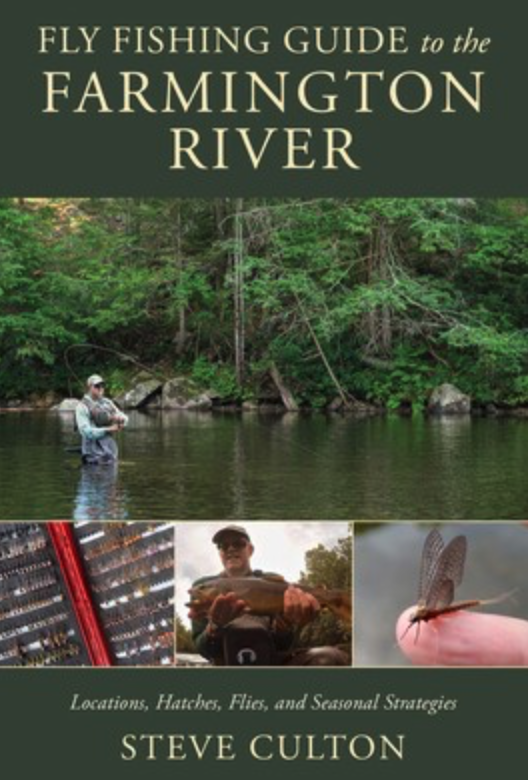 Steve Culton's brand new book "Fly Fishing the Farmington River" is out now, and it is fantastic. The book contains detailed information on the river, from the Hogback Dam in Riverton down to Tariffville Gorge. There is an updated hatch chart, new fishing locations, specific techniques and strategies for the Farmington, suggested fly patterns, plus detailed info from guides & river regulars. We have of plenty of in stock available in the shop and in our online store here: Book
UpCountry will be holding a special "Hardy / Greys Demo Day" on Saturday, October 24th from 11am to 3pm. This will be your first chance to play with the new Hardy Tactus Rods, the new Hardy Firecrest fast action series rods, the new Greys Compflex , the the completely redesigned Greys Streamflex and more. Meet Earl Evans, our regional sales representitive, enjoy some food and refreshments, and see all the good things UpCountry has been up to inside our store.
For more fish photos, store announcements and river news visit our Facebook page.
River Report:
A customer found a knife that was lost in the Boneyard area over the past weekend, if you think it might be yours contact us at 860-379-1952.
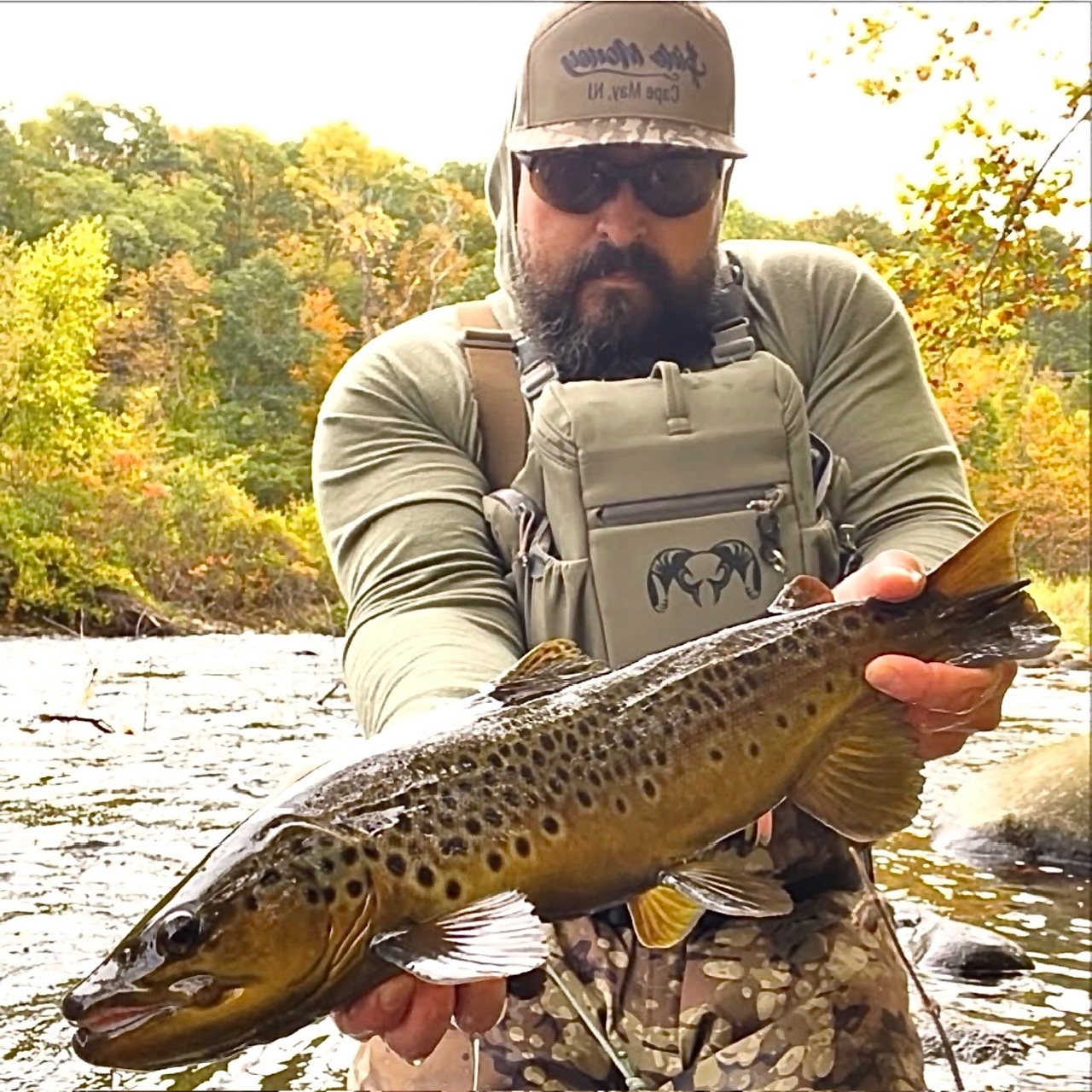
I think it's safe to say that foliage season has begun, and it's only going to get more colorful. Cool nights in the forecast will accelerate this. Looks like beautfiul weather for the week, dry and mostly sunny with highs averaging in the 60's, and nights mostly in the 40's. Nothing quite like trout fishing in the stunning backdrop of New England autumn colors. When the leaves change, it also signals the time of year when brown & brook trout spawn. Typically on the Farmington River the bulk of that takes place between about October 20th and mid November, which is earlier than a lot of other rivers. FYI be careful handling female brown trout right now, they are full of eggs. Try to keep them in the water if possible, and do not squeeze them. Brown trout get more aggressive before & during the spawn, which can make streamers a good choice. Small nymphs #18-22 continue to be consistent producers, and dry fly are working well during hatches. The main October bugs are tan/brown Caddis #16-18, Blue Winged Olives #20-24, and Isonychia #12-14, with several other bugs in the mix too. I've been seeing trout eat Yellow Sally Stoneflies on the surface at dusk every time I've been out, they typically run #14-16, but can range from #12-20. Walking the dog last night near the river, I saw good numbers of both Yellow Sallies, & tan/brown Caddis flying upstream to egg-lay in the evening.
Yellow in a streamer will often trigger October trout- can be all yellow, or olive & yellow, brown & yellow, etc. Other good colors to try include olive, tan, white, and brown. Play with retrieves- start with a fast, aggressive presentation and then adjust depending upon the trout's reaction. This is a time of year to play with big streamers in the 4-6" range. You won't catch as many trout, but it ups your odds of landing a true trophy. For catching greater numbers of trout, 3-4" can be a sweet spot- big enough to interest a larger fish, but small enough that the 12-14" fish will still try to eat it.
The total flow in the Permanent TMA/Catch & Release (C&R) is normal and medium-low at 199cfs. Riverton USGS gauge is reading 177cfs two miles below the dam, and the Still River is adding 22cfs just below that. We are in good shape for early October. River water temp is 61 degrees in Riverton this morning. The entire river from Riverton to Unionville is fishing well, so don't limit yourself. Its now the time of year when due to cooler air temps, shorter days, and longer nights, water temps are colder as you move away from the dam on most days.
As mentioned above, big streamers can be a very good fall fly choice, but smaller streamers and Wooly Buggers will bring a lot of trout to the net in the coming weeks as well. If you favor quantity over just chasing big trout, smaller offerings will produce more fish overall and still catch the monsters, but to a lesser degree. The big daddies and big mamas of the river consider them less of a threat and put up less of a chase.
Grady's favorite technique for catching trout on streamers is to work upstream, making long casts to the bank, followed by a rapid stripping retrieve. Look for current breaks such as rocks, and features that protect trout from birds like overhanging branches, big rocks, undercut banks, and logs to cast around. Keep moving slowly upstream on foot, making just enough casts to cover an area thoroughly. Most of your strikes will come on the first couple of presentations, so don't spend too much time in one spot. Use polarized glasses to help see your streamer underwater and to see any trout chasing them down. If a trout chases but doesn't commit, immediately follow up with another cast. If that doesn't work and the fish is big enough, consider changing your streamer to get another chance.
When fishing streamers its important to cover lots of water and get your offering in front of as many trout as possible. Use heavy tippet for this method such as 0x-2x (depending upon fly size) - the trout are looking at your fly, not at the tippet you use and you want to be able to set the hook HARD, using a hybrid of a strip-set and an angled sideways lift.
Bigger Stonefly nymphs #8-10 are still working well, especially in the mornings, but they can pull above average fish later in the day too. Trico Spinners #22-26 are still on the water, but have moved to late morning following the cold overnights we have had recently. Isonychia #12-14, have been out in the afternoons, with the trout eating them well in some areas. Blue Winged Olives (BWO's) #18-24 & Hebe's/Yellow Quills #16-18 are hatching in the afternoon & evening. Tan/brown Caddis #16-18 & big October Caddis are increasing in numbers and are producing trout throughout the day, particularly in fast water. Still seeing some big #12-14 Summer Steno's/Light Cahills in the eves, along with #14-16 Yellow Sallies.
Nymphing remains a consistent producer when the trout aren't rising. A lot of the best fishing currently is in riffly water with a bit of current and some chop to it, whether you are fishing nymphs or dry flies. Many bugs live and hatch in faster water, and the evening egg-laying/spinner falls occurs where the riffles are. Smaller, heavy jig streamers fished slow & deep are a great fly to fish after you are done nymphing a run, often producing a bonus fish or two or three. Junk Flies (Mops, Eggs, Worms) are also good "clean up batter" flies. Don't be afraid to try some gaudy flies in October, due to the impending spawn trout often react well to funky colors. Could be a bright hot-spot, a fluorescent tag/tail, or a colorful bead.
Fall often means using smaller nymphs in the #18-22 range, especially in low to medium flows- this can be the difference between a very slow outing and a banner day. Most nymphs are small this time of year. A good strategy at our current flows is to use a weighted #14-18 nymph at the bottom of your rig to get your flies down, and a smaller lighter pattern on a dropper 18-24" above. On your top dropper, you can even use an unweighted fly, a brass bead nymph, or a soft hackle/wet fly if your anchor fly on point is heavy enough to get your rig down.
Hatches:
Dries:
- Isonychia #10-14: Fast water bug, usually hatches mid-afternoon to dark. Even if you don't see any hatching and no trout are rising, you can successfully blind-fish these in riffly water that you would normally nymph. Hatch usually goes at least into early November on our river, but the bugs get smaller over time.
- Blue Winged Olives/BWO’s #18-24: afternoon hatch on cloudy days and later in the day when the sun goes off the water on days with blue skies.
- Hebe #16-18 (Little Yellow Quill): a dull yellow Sulfur-type mayfly we see in late summer/early fall in the late afternoon & evenings.
- Assorted Caddis (tan #16-18, black & gray #20-22)
- Tricos #22-26: the main event for this morning hatch is the spinner fall, which normally happens when the air temps hit 68 degrees. Mostly upriver and near the end of the hatch now.
- Hoppers, Crickets, Beetles & Ants #12-20: great option from late morning to late afternoon.
- Yellow Sally #12-18: A smaller Stonefly that lives in fast water, looks like a miniature Golden Stone. Trout have been eating them on the surface at dusk.
- Light Cahill/Summer Steno #12-14: evenings
- Summer/Winter Caddis #18-24: hatch is typically early to mid morning. Trout focus on the pupa first, and then as the morning progresses they normally switch to the winged adults when they return to egg-lay. Try both twitching & dead-drifting your fly, trout often key on movement with this bug. Hatches all year, peaking in both the summer & winter.
- Midges #20-28: 365 days a year, underrated and overlooked by many anglers.
Nymphs:
- Caddis Pupa #16-18 (tan, olive, green)
- Caddis Larva (olive, green, tan, cream) #14-16: tons of these in the river, good all year
- Pheasant Tails/Frenchies #12-22: imitates a wide range of Mayflies including Hebe's (Yellow Quill), Baetis/Blue Winged Olives, Isonychia, and small Stoneflies.
- Walt's Worm #14-20: great general purpose nymph that suggests many different bugs, especially Caddis on this river.
- Isonychia Nymph #12-14: dead-drift, swing, twitch, and even strip them in. They are great swimmers, and some days trout prefer different presentations- you won't know until you experiment. Use true Isonychia nymphs, large Prince nymphs & Pheasant Tails to represent them.
- Baetis/BWO Nymphs #16-22
- Yellow Sally #14-18: small Stonefly that looks like a miniature Golden Stone. Lives under rocks in fast water. Active & hatching. Dries are good in fast water near dusk.
- Junk Flies (Eggs, Mops, Squirmy/San Juan Worms, Green Weenies): Often work when standard nymphs fail, especially when there aren’t many hatches.
- Large Stonefly Nymphs #8-10: golden/yellow, brown, black, Stoneflies are a mouthful that can be hard for trout to pass up, and there are a surprising amount of them in the river. Good choice when flows are up. Some days when trout won’t move for a small nymph, it takes a bigger bite of food to get an eat. Often catches larger than average fish. Best in early morning during summer. Look for the empty shucks on top of rocks where they crawl out to emerge in fast water.
- Midges #18-22 (black, olive, red): Zebra Midge, Flash Midge, Red Iris Midge, etc.
Streamers:
-Fall is Prime Time to fish medium to large streamers and take advantage of the trout's seasonal aggression. Streamers that incorporate yellow can be particularly good in the fall. Periods of higher/dirty water are a great time to fish big streamers and target big trout. Also early & late in the day during periods of low light. They are a good clean-up fly to try before right before you leave a spot.
-Woolly Bugger #4-12: assorted colors expecially yellow, white and tan
-Zonker / Rabbit Strip tied streamers #4-8: In white, natural, olive, and Fall colors
-Zuddler #4-6: olive, brown, white, black, yellow
-BMAR Yellow Matuka #6 - deadly fly!
-Articulated Streamers 4-6" long: various patterns to target the biggest trout in the river, a good choice in the fall to catch fewer but bigger fish
___________________
If you like our fishing report, please consider buying your gear from us. We generally ship the same day, for free anywhere in the country for orders over $70. We ship small orders via mail or UPS for a small cost. Our shop can only exist with your patronage.
UpCountry Sportfishing is always looking for good used fly fishing gear for cash and trade. This is how we get those great items listed on our website and you see on our racks. We buy fly rods, fly reels, quality classic bamboo, and fly tying equipment etc. Bring in your old items and we can help turn them into something new. We give more for trade ins than anywhere else. Call ahead for an appointment.
Recent Posts
- » Monday 10/5/26 Farmington River Report: Foliage, big browns & Simms Second Wind Waders
- » Thursday 10/1/26 Farmington River Report: Foliage is starting to pop
- » Monday 9/28/26 Farmington River Report - Great conditions!
- » Friday 9/25/26 Farmington River Report- Streamer Season is here!
- » Monday 9/21/26 Farmington River Report - Excellent weekend fishing & a bit of needed rain.
- |860-379-1952|
- Info@farmingtonriver.com
- |
- Directions
- |
- Copyright© 2026 Upcountry Sportfishing|
- Site design by
 tyelus|